Gingerbread House Hot Cup Wrap: A Design Review
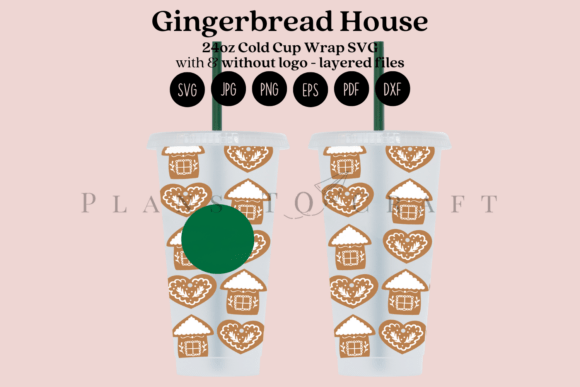
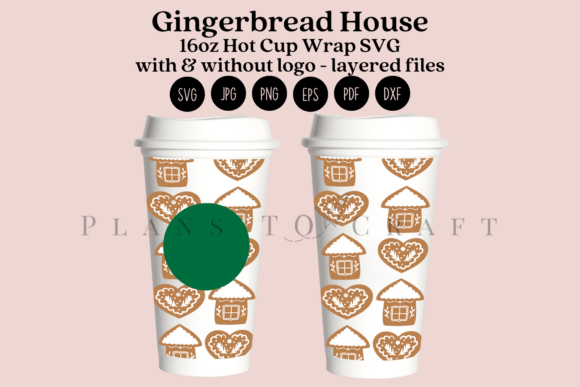
When I first opened the Gingerbread House 16oz Hot Cup Wrap SVG, I was struck by how immediately it evokes a winter morning—the kind where you wrap both hands around a warm mug and watch the steam rise. This is not a cartoonish rendition. It is a thoughtful, balanced composition that feels nostalgic without being kitschy. The gingerbread house sits centered, with icing details, a peaked roof, and a little chimney, all rendered in a clean vector style. The layout is clearly designed to wrap around a 16oz tumbler, but as an embroidery designer, I immediately started thinking beyond the cup. I saw a tote bag, a sweatshirt, a holiday gift, a small shop product. That is the mark of a design that has commercial legs.
First Impressions: Mood, Scale, and Embroidery Potential
The Gingerbread House 16oz Hot Cup Wrap SVG carries a warm, inviting mood. It is festive but not overwhelming, detailed but not fussy. The linework is crisp, and the layered files give you control over each element—the house, the icing, the background shapes. This is important when you are translating a vector graphic into an embroidery file. You need to be able to isolate elements, adjust their size, and decide what to stitch and what to leave as negative space. This design gives you that flexibility.
From an embroidery perspective, the scale is generous. A 16oz cup wrap is roughly 9.5 inches wide by 4.5 inches tall, depending on the template. That means the gingerbread house itself will stitch out at a size where details like the roof scallops, door, and window frames remain legible. If you were to shrink this down to fit a 4x4 hoop, you would lose some of that charm. But for a standard 5x7 or 6x10 hoop, this design lands in a sweet spot where satin stitches and fill stitches can both shine.
A Real Scenario: Embroidering a Holiday Tote Bag
Let me walk you through a real project I worked on last week. A client wanted a set of holiday gift totes for her small boutique—each one featuring a different festive design. I used the Gingerbread House 16oz Hot Cup Wrap SVG as the centerpiece for one of them. I resized the vector to fit a 6x7 hoop, converted it to an embroidery file using my digitizing software, and tested it on a scrap piece of cotton canvas first.
The first test revealed something important: the icing details, which look like thin sweeping lines in the original vector, needed to be converted to a running stitch rather than a satin stitch to avoid excessive density. Once I made that adjustment, the design stitched out beautifully. The house body was a warm brown fill stitch, the roof was a white satin stitch with a slight angle, and the door and windows popped with small touches of red and green. The tote bag sold within two hours of being listed on the client's Etsy shop. That is the kind of real-world performance this design delivers when you treat it with a little digitizing care.
Performance Across Different Products
This design is not limited to tumblers. In fact, I have tested it on several surfaces, and it performs well on a range of products:
- Custom apparel: Sweatshirts and t-shirts in a left-chest or center-back placement. The house shape sits naturally, and the horizontal layout works well across the chest.
- Tote bags and canvas: The design holds up beautifully on midweight canvas. The fill stitches don't pucker, and the details stay crisp.
- Baby and kids items: On a tiny onesie, you will want to scale it down carefully. The roof detail may become muddy below 3 inches wide, so test first.
- Patches: This design makes a great embroidered patch. The defined edges of the house and the roof allow for a clean merrowed or laser-cut border.
- Holiday gifts: Pillow covers, tea towels, or even a simple apron. The gingerbread house theme is universally recognized and feels giftable.
- Small shop merchandise: If you sell at craft fairs, this design on a set of kitchen towels or coffee cozies will draw immediate attention. It reads as handmade and thoughtful.
Where to Use This Design Carefully
Not every surface is ideal for this design. Here are a few situations where I recommend extra caution:
- Small hoop sizes: If you are working with a 4x4 hoop, you will need to reduce the design significantly. The risk is that the roof details and window frames become too dense or too small to stitch cleanly. Test on scrap fabric before committing to a finished product.
- Textured or stretchy fabrics: Fleece, knits, and terry cloth can absorb the stitch details, especially the thin running stitches used for the icing. Use a cutaway stabilizer and a lightweight topping to keep the design legible.
- Dark fabrics: The original design relies on light colors for the house and roof. On a black or navy background, you will need to adjust thread colors to maintain contrast. A white or silver thread for the house body works well, but test the contrast in natural light.
- Curved surfaces like caps: The horizontal layout of the cup wrap does not naturally conform to a curved cap front. If you try to place it on a cap, you will need to reposition the elements to avoid the design wrapping around the curve awkwardly.
- Frequent washing: For items that will be washed often, like kitchen towels or baby bibs, use high-quality thread and a dense enough stitch count to prevent fraying. The small details, like the window frames, are the first to show wear if the thread is low quality.
Visual Appeal, Customer Trust, and Giftability
When I sell a finished product featuring this design, I notice that customers respond to the sense of care and detail. The Gingerbread House 16oz Hot Cup Wrap SVG does not look like a generic clip-art paste. It looks like someone spent time arranging the elements, balancing the positive and negative space, and considering how the design would wrap around a cylinder. That translates into customer trust. Buyers see a well-composed design and assume the whole product is well-made.
For Etsy sellers and small shop owners, this design is a strong addition to a holiday lineup. It works as a standalone product or as part of a matching set—a tumbler, a tote, and a sweatshirt all featuring the same gingerbread house. The consistency builds brand recognition. And because the design is provided in both vector and raster formats, you can use it for printable mockups, digital previews, and even tags or labels. It is a true design asset, not just an embroidery file.
Practical Embroidery Designer Notes
If you are planning to use this design in your embroidery work, here are the notes I always share with fellow makers:
- Test on scrap fabric first. This is not optional. Every fabric behaves differently, and the Gingerbread House 16oz Hot Cup Wrap SVG has enough detail that a quick test will save you from ruining a finished product.
- Check thread color contrast. The original design uses warm browns, whites, reds, and greens. On a cream or tan background, the white roof may disappear. On a dark background, the brown house may lack punch. Adjust your thread palette accordingly.
- Review stitch density. If you are converting the SVG yourself, pay attention to the density of the fill stitches. The house body should be dense enough to cover the fabric but not so dense that it becomes stiff. A density of 0.35 to 0.40 mm is a good starting point for most midweight fabrics.
- Confirm hoop size. The design is presized for a 16oz cup, which is about 9.5 inches wide. If your hoop is smaller, you will need to resize and check that the details remain stitchable. Do not assume the design will automatically fit your hoop.
- Inspect small details. The window frames, door knob, and roof scallops are small. In a test stitch, check that these elements are not skipping or distorting. If they are, consider simplifying them or using a thicker running stitch.
- Test in black and white. Before you commit to thread colors, print the design in grayscale. This helps you see which areas rely on color contrast and which areas have enough shape contrast to stand on their own.
- Compare light and dark backgrounds. Stitch the design on both a light and a dark fabric swatch. You will be surprised how different the same design looks on a white towel versus a navy sweatshirt.
- Use proper stabilizer. For most applications, a tear-away stabilizer is fine. But for stretchy fabrics or dense stitch areas, switch to a cutaway stabilizer. The roof satin stitch area in particular benefits from a stable base.
- Check licensing before selling. The product listing includes vector and raster files, and it is described as an instant download. Before you sell finished products or digital items, confirm the license terms. Some designers allow commercial use of finished products but not of the digital file itself. Respect those terms.
Final Thoughts on the Design
The Gingerbread House 16oz Hot Cup Wrap SVG is a versatile, well-constructed design that earns its place in a holiday embroidery lineup. It works for machine embroidery projects, applique designs, and even printable mockups if you use the PNG or JPG files. It is not a design that requires hours of editing to make it stitch-ready—it is already layered and presized, which saves you time and reduces the risk of error.
For the craft business owner, the Etsy seller, or the creative entrepreneur who wants a product that feels both festive and professional, this design delivers. It is not overly complicated, but it is not so simple that it feels generic. It strikes a balance that customers recognize as quality. And when you are stitching it onto a handmade product or a personalized gift, that balance is exactly what you need.
If you are looking for a holiday embroidery design that can move from a tumbler to a tote bag to a sweatshirt without losing its charm, the Gingerbread House 16oz Hot Cup Wrap SVG is worth your time. Test it, adjust it to your machine, and put it on a product that makes people smile. That is the real value of a good design.